Every small business owner I know has tried to buy customer loyalty at least once. A punch card. A points program. A 10 percent coupon for coming back. And almost every one of us has watched the same thing happen: the customer redeems the offer, enjoys the discount, and disappears the moment a better one shows up.
If you are wondering how to build customer loyalty that actually lasts, the first step is accepting an uncomfortable truth. What most businesses call loyalty is really a transaction with a delay built in. Real brand loyalty works differently, and once you see how, you cannot unsee it.
Repeat purchases are not the same as customer loyalty
A repeat customer is a behavior. A loyal customer is a relationship. The difference matters because behavior can be bought, and relationships cannot.
A customer who returns because you are the cheapest, the closest, or the one with the points balance is not loyal to you. They are loyal to the deal. The day the deal changes, so does the behavior. A truly loyal customer comes back when you are not the cheapest, tells other people about you without being asked, and forgives the occasional mistake.
Most small business owners are trying to build customer loyalty with tools designed to produce repeat purchases. That mismatch is why so many loyalty efforts feel like hard work with thin results.
Why discounts and rewards programs create rented loyalty
Discounts and points do one thing well. They give a customer a reason to act today. What they cannot do is give a customer a reason to care.
Think of it as rented loyalty. You pay every month, and the moment you stop paying, the loyalty leaves with the lease. Worse, every discount quietly teaches your customers to wait for the next one. You end up training the very behavior you were trying to prevent.
Small businesses feel this most. You cannot out-discount a giant, and you should not want to. The good news is that you do not have to compete there at all.
There is also a hidden cost. Every promotion you run shifts your customers’ attention from why they like you to how much they are saving. Over time, price becomes the only conversation you are having, and that is a conversation small businesses rarely win.
What loyal customers actually want
Here is what two decades of running heritage jewelry brands taught me about brand loyalty. The customers who stayed with us for years were rarely the ones chasing a price. They were the ones who felt that buying from us said something about who they were and where their family came from.
In other words, they did not just like the product. They belonged to something when they bought it.
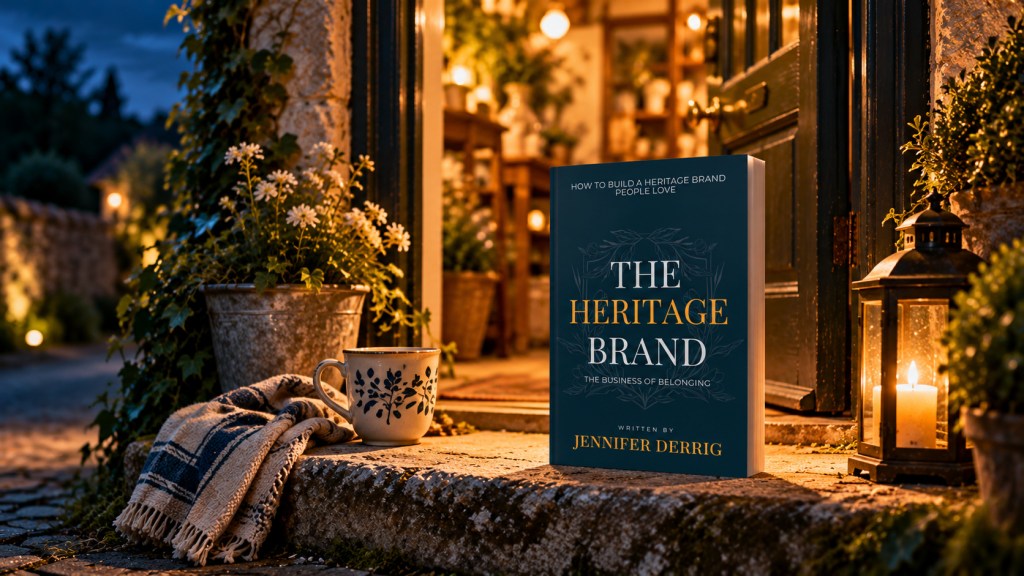
That is the idea at the center of my book, The Heritage Brand. People are drawn to brands that reflect their identity, their values, and their people. I call the distance between what your customers feel and what your business gives them the belonging gap, and closing it is the most powerful way I know to build customer loyalty without a single coupon.
I will not hand you the whole framework in a blog post, because it deserves more than a few paragraphs. But I can show you where to look.
Five questions to ask about your own business
Before you launch another promotion, sit down with a notebook and answer these honestly. Each one points at a place where loyalty is either being built or quietly lost.
- If you raised your prices by 10 percent tomorrow, which customers would stay, and why would they stay?
- Can a customer describe what your business stands for in one sentence that has nothing to do with price?
- When a customer buys from you, what does it say about them to the people they love?
- Where do your customers connect with each other, or with you, outside of the checkout page?
- What do you do in the first week after a sale that a bigger competitor would never bother to do?
If those questions were hard to answer, you are in good company. Most small business owners have never been asked them. The answers are where brand loyalty begins.
Want the full picture?
These five questions are only the starting line. The book explains the belonging gap in depth, and the online courses show you how to close it in your own business.
Three mistakes that quietly kill customer loyalty
- Talking about the product instead of the person. Customers do not remember your features. They remember how your brand made them feel about themselves.
- Treating the sale as the finish line. Loyalty is built after the purchase, in the moments most businesses ignore.
- Copying big-brand loyalty tactics. Points and tiers work for companies with millions of customers. Small businesses win on something a big company cannot fake.
Notice that none of these mistakes are about money or marketing budgets. They are about direction. Small shifts in where you point your attention can change how your customers feel about you.
Does this work if you are not a heritage business?
Yes. I wrote the book for owners whose products are rooted in culture and tradition, but the belonging principle applies to any small business with a story, a craft, or a community. A bakery, a boutique, a consulting practice, and a family hardware store all earn customer loyalty the same way: by making people feel they are part of something.
That is why I turned the book into The Heritage Brand Bundle, three online courses built for small business owners in any industry. You will find a 10-minute starting point in my post on what a heritage brand really is, along with a free self-check you can download.
Your next step
If this post made you look at your own customers differently, keep going. The book gives you the full picture of why belonging drives loyalty, and the courses walk you through applying it to your business step by step, with worksheets you can use right away.
Build loyalty people can feel
Start with the book for the big idea. Then take the courses to turn it into a plan for your business, with worksheets and a clear path to follow.
Frequently asked questions
What is the best way to build customer loyalty for a small business?
The most durable way to build customer loyalty is to give customers a sense of belonging, not just a reward. Discounts and points change behavior for a while. Belonging changes how customers feel about your brand, which is what keeps them coming back even when you are not the cheapest option.
What is the difference between customer loyalty and brand loyalty?
Customer loyalty describes how likely a person is to keep buying from you. Brand loyalty goes deeper. It means the customer identifies with what your brand stands for and chooses it over alternatives because of that connection.
Do loyalty programs and discounts work?
They can increase short-term repeat purchases, but they rarely create lasting loyalty on their own. Customers often follow the deal rather than the brand, so the effect fades when the incentive does.
How long does it take to build customer loyalty?
It depends on your business, but loyalty is built through consistent experiences over months, not a single campaign. Small, repeated moments of recognition and care add up faster than most owners expect.
About the author
Jennifer Derrig is a FIT-trained jewelry designer, the founder of The Irish Jewelry Company (2006) and The Italian Jewelry Company, and the author of The Heritage Brand: How to Build a Heritage Brand People Love. She teaches small business owners how to turn their story into a brand people belong to.

