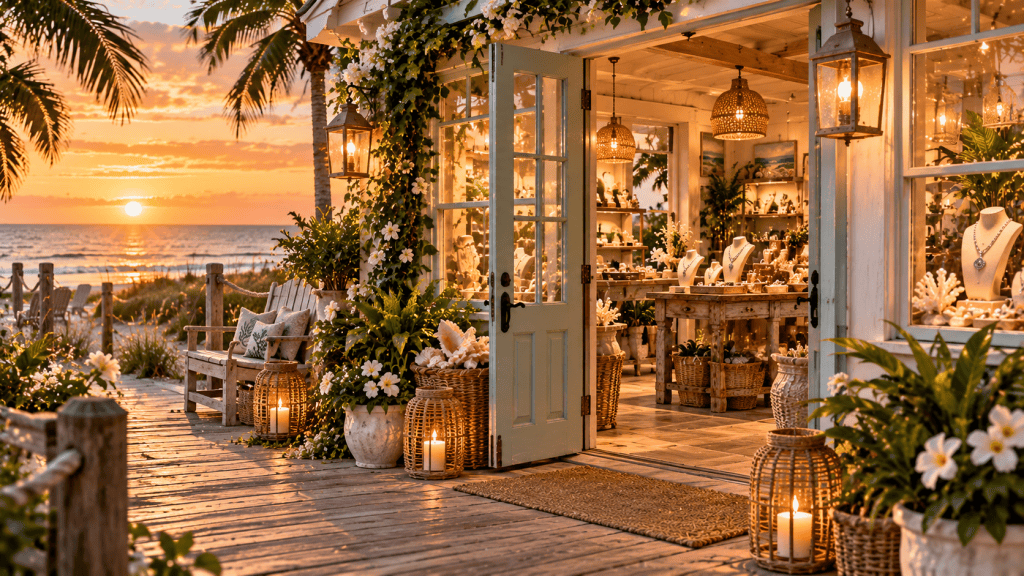
You live near the water, or you grew up near it. You make something beautiful, a sea glass necklace, a lake house sign, a lighthouse print, a soy candle that smells like low tide in July. And your shop sells like a beach in February: quiet, windy, and mostly empty.
If you have typed “how to market a beach brand” into a search bar at midnight, I know that feeling. You post, you list, you run the summer sale, and you get crickets. You cannot afford an agency, and you do not want a coach who tells you to “just go viral.”
Here is what I have learned in two decades of heritage e-commerce: it is almost never the product. It is the belonging gap.
The Belonging Gap on the Coast
The belonging gap is the space between what your product is and what it means to the person who buys it. A sea glass necklace is glass, wire, and a clasp. But to the right buyer, it is the morning she walked the tideline with her grandmother, or the beach she left when she took a job in the city.
Most coastal and lake makers market the object. “Handmade sea glass necklace. Genuine glass. Sterling silver chain.” All true. All forgettable.
Here is the idea at the center of my book, The Heritage Brand: heritage brands are in the belonging business, not the product business. And heritage is bigger than ethnicity. A heritage is any identity people feel they belong to. A place counts. A way of life counts. A tribe with its own symbols, rituals, and insider language counts. Beach people are a tribe. Lake people are a tribe. They have their own words, their own seasons, and their own sacred little rituals.
Meet Dana, a Hypothetical Maker Stuck in the Shallows
Picture a maker named Dana Whitcomb who runs a small shop called Driftline Sea Glass. (Dana is made up, but I bet you know her.) She collects glass on her home shoreline, tumbles it, and wraps each piece by hand. Her photos are gorgeous. Her listings say things like “handmade sea glass necklace, aqua, adjustable chain.”
Dana posts three times a week and runs a Fourth of July sale. Nothing moves, and she wonders if she should lower her prices or quit.
Dana has two kinds of customers and does not know it. The first is the tourist, who wants to take the place home. The second is the person who grew up there and moved away, a coastal diaspora. She now lives in a landlocked apartment with a shell on the windowsill and a lump in her throat every time August comes around. She is not shopping for jewelry. She is shopping for a way back.
When Dana changes just one thing, her story, everything shifts. She stops listing “a necklace” and starts telling people about the first-swim ritual of her town, the way everyone goes in before the water is warm enough, shrieking, because that is how you officially open the season. She writes about where each piece was found and what the tide did to it. She starts calling her email list “the Tideline Club” and sends one note a month about what washed up.
Same glass. Same wire. Different meaning. Now the person in the landlocked apartment reads a listing and thinks, that is my beach.
You are not selling a souvenir. You are selling the feeling of being home.
Why This Works: Identity-Driven Purchasing
This is not a marketing trick. It is how people buy. Economists George Akerlof and Rachel Kranton wrote about identity economics, the idea that people make choices to express and confirm who they are. Social Identity Theory says something similar: we define ourselves partly by the groups we belong to, and we are drawn to symbols of those groups.
Coastal and lake life is full of those symbols. A shell, a buoy, a “lake hair, don’t care” sign, a lighthouse on a mug. Buyers use them to say, “This is who I am, even when I am nowhere near the water.”
My best proof comes from my own history. I once ran an Irish gift shop that closed during the COVID lockdowns. Years later, customers still tell me they miss it. They do not miss the shelves. They miss the place and how it made them feel. They were buying belonging all along, and so are your customers.
Seven Low-Cost Moves to Make This Month
None of these require an ad budget. They require attention, a notebook, and a little courage. This is how to sell beach-themed products online without competing on price.
- Rewrite your top three listings as scenes. Open with the moment, not the material. “The water is still cold, and you are going in anyway” beats “Handmade sea glass necklace.” Put materials lower down, where they belong. If you want to know how to sell sea glass jewelry on Etsy, this is the single biggest lever: lead with where the glass was found and what it means, then give the details.
- Collect your insider language. Write down the words only your people use: local nicknames for beaches, the name for the sandbar, the first-swim rule, the lake house phrases your family repeats every June. Sprinkle them into listings, captions, and product names.
- Name a ritual and own it. Every coast and lake has them: the Memorial Day dock launch, the last-weekend-of-summer bonfire, the first dip. Build a small collection or a post series around one ritual.
- Write directly to the faraway customer. Add a line to your About page and listings for people who left: “For everyone who grew up here and carries it with them.” Diaspora buyers are loyal because the product keeps them connected.
- Start a simple email list. It is the cheapest, most owned channel you have, and it matters year-round. Offer something small and useful, like a printable tide-pool field guide or a “what washed up this month” note. This is real Etsy marketing on a budget, and it gives you a place to talk to people when the algorithm goes quiet.
- Give your off-season a story. Winter is when your coastal diaspora misses home most. Market the gray-day beach walk, the stormy lighthouse, the quiet lake in November. Make gifts for the person who is already dreaming of next summer.
- Turn buyers into members. Give your community a name, a small perk, and a reason to come back: early access to new finds, a yearly “season opener” note, a way to share their own beach photos. A buyer becomes a member when they feel part of something.
Lake Life Brands Have the Same Opportunity
Lake life brand marketing works the same way, whether you sell signs, apparel, or decor. Lake people are fiercely loyal. They have a name for their lake, a favorite cove, a family dock, and a need to feel that summers there still belong to them back in the city. These are also the best coastal boutique marketing ideas: act like the keeper of the story, not a shelf of nice things.
How to Tell Your Brand Story Without Being Cheesy
Many makers freeze here, so let me make it simple. Learning how to tell your brand story is not about writing a novel. Answer three questions in plain words:
- Where does this come from, and what does that place feel like in one scene?
- What ritual or season does this product belong to?
- Who is it for, and what are they missing when they are not there?
Answer those honestly and you already have a story. Put it on your About page, listings, and emails, and repeat it.
The Same Framework, Built for Any Heritage
I built this framework over two decades running The Irish Jewelry Company and The Italian Jewelry Company, and it travels. The same steps work for a beach brand, a lake house maker, a country or biker label, or a hometown shop. Find the identity, close the belonging gap, and give people rituals, language, and a community to join. My book, The Heritage Brand, walks through all of it, including a 12-month roadmap so you are never guessing what to do next.
If your shop is stuck, you may also want to read my broader walkthrough, why isn’t my Etsy shop selling, which looks at the belonging gap across every kind of maker.
Frequently Asked Questions
Do I need a big marketing budget to market a beach brand?
No. The most powerful fixes are free or close to it: a stronger story, insider language, a ritual your customers can join, and an email list. Spending more on ads before you close the belonging gap just makes the gap more expensive.
Why isn’t my beach shop selling even though my products are good?
Good products are the starting line, not the finish. If your listings describe materials and size but never say what the product means, buyers scroll past. Close the gap between what it is and what it means, and the same product starts to feel like theirs.
How do I sell sea glass jewelry on Etsy without competing on price?
Lead with the place, the find, and the feeling. Tell buyers where the glass came from, what the tide did to it, and who it is for. Price becomes less of a question when the piece feels personal.
Can I sell to people who are not tourists?
Absolutely. People who grew up at the coast or lake and moved away are some of your most loyal buyers. They purchase to stay connected to home, so speak to them directly in your About page, emails, and gift ideas.
How do I keep selling after summer ends?
Market the feeling, not the weather. Winter is when coastal and lake homesickness peaks, so give people gifts, stories, and rituals that carry the place through the cold months.
Your Next Step
Start with the free worksheets at theheritagebrandbook.com. They walk you through finding your belonging story at zero cost, and you can finish the first one in an afternoon.
When you are ready to go deeper, grab The Heritage Brand on Amazon, or learn at your own pace with The Heritage Brand Bundle: Build a Business People Belong To. Both are an affordable alternative to hiring an agency or a coach.
Stop selling the souvenir. Start selling the summer.
Learn to close the belonging gap yourself
Start free with the ten-minute Heritage Brand Check. When you are ready for the full framework, the book and the online courses walk you through it at your own pace, no agency required.
About the author: Jennifer Derrig is a FIT-trained jewelry designer and the author of The Heritage Brand. She founded The Irish Jewelry Company in 2006, later launched The Italian Jewelry Company, and has spent two decades in heritage e-commerce helping makers turn identity into a brand people belong to.


Leave a Reply